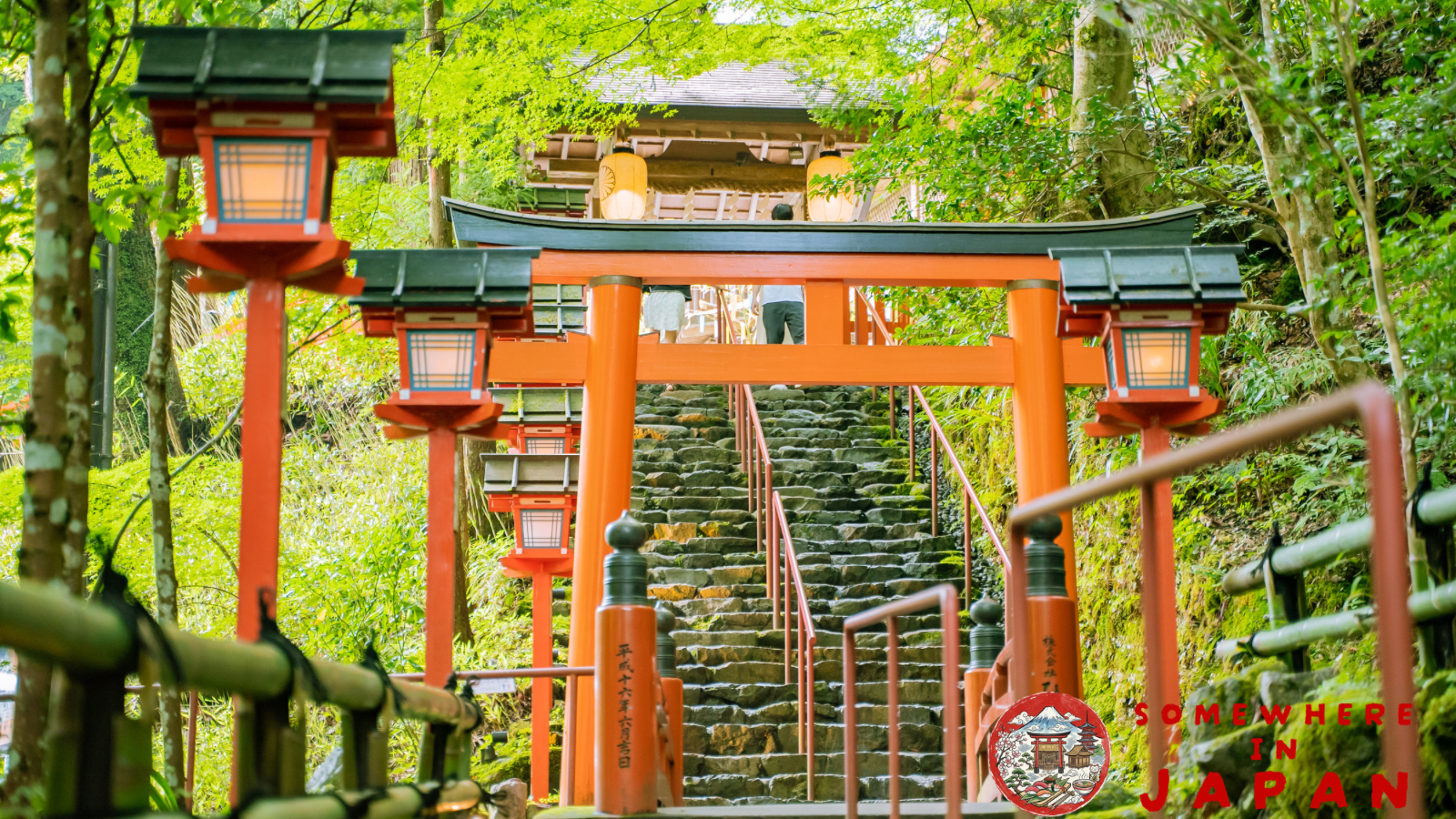
Visiting Japan’s historic shrines and temples is a highlight of any trip. While both are peaceful, sacred spaces, they belong to two different traditions: Shinto shrines (jinja) and Buddhist temples (otera).
You do not need to be religious to visit, and locals welcome respectful travelers. Knowing a few simple customs—and the key differences between shrines and temples—will help you feel confident and avoid common missteps.
I’m Shuto!
Travel Japan Like a Local!
My mission?
To help you experience the very best of Japan
How to Tell a Shrine Apart from a Temple
Before stepping inside, look at the entrance. It immediately tells you which type of site you are visiting:
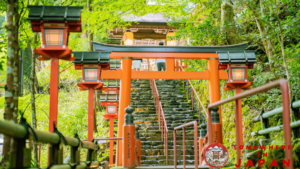
- Shinto Shrines (Jinja): Marked by a Torii gate (a traditional two-post gate, often painted vermilion red) at the entrance. You will also often see stone guardian dogs (komainu) and thick braided ropes (shimenawa) with white zigzag paper streamers.
- Buddhist Temples (Otera): Marked by a large, roofed wooden gate (Sanmon), often flanked by fierce guardian statues (Nio). Inside, you will find large incense burners, Buddhist statues, and sometimes a cemetery.
Step 1: Entering and Purifying Yourself
Both shrines and temples begin with a ritual cleansing before approaching the main hall.
- Bow at the Gate: Before walking through a torii gate (shrine) or main wooden gate (temple), stop, face the main building, and give a slight bow.
- Walk on the Sides: At shrines, avoid walking directly down the center of the main pathway (sando). The center is reserved for the deities (kami), so stick to the left or right side.
- Use the Purification Fountain (Chozuya): Near the entrance, you will find a water pavilion with wooden or metal ladles. Follow this exact sequence using a single scoop of water:
- Pick up the ladle with your right hand and scoop water to rinse your left hand.
- Switch the ladle to your left hand and rinse your right hand.
- Switch back to your right hand, pour a little water into your cupped left palm, and use it to rinse your mouth (do not touch your lips directly to the ladle). Spit the water discreetly into the drain beside the basin.
- Rinse your left hand one more time.
- Tilt the ladle vertically so the remaining water runs down the handle to clean it for the next visitor, then place it face down on the rack.
Step 2: Praying at the Main Hall
This is where shrine and temple etiquette differ most.
At a Shinto Shrine: “Two Bows, Two Claps, One Bow”
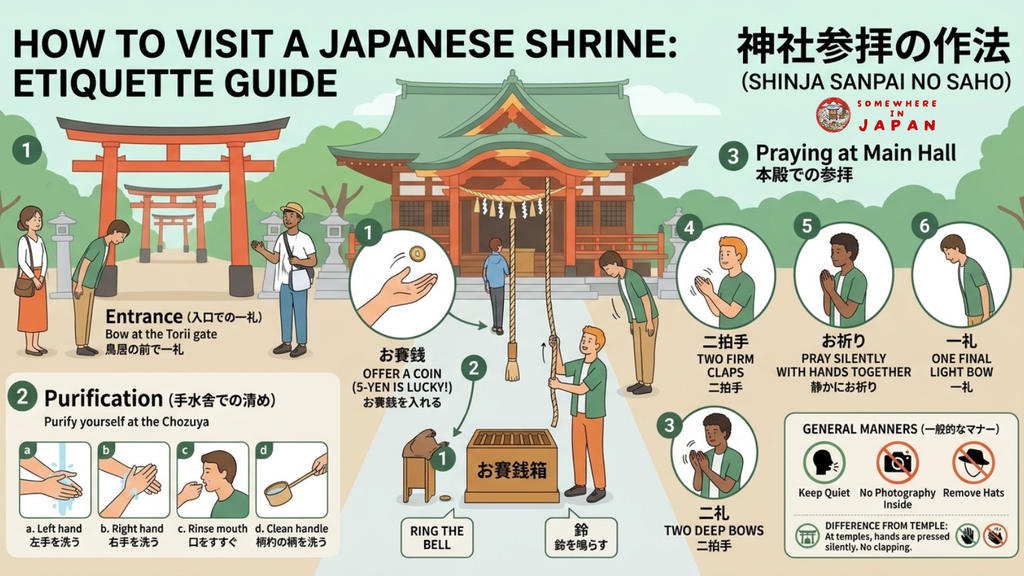
- Toss a Coin: Gently toss a coin into the wooden offering box (saisen-bako). A 5-yen coin (go-en) is considered especially lucky because its pronunciation sounds like the Japanese word for “good connection” or “good fate.”
- Ring the Bell: If a thick rope is attached to a bell above you, give it a firm shake to announce your presence to the deity.
- Bow Twice: Bow deeply twice at a 90-degree angle.
- Clap Twice: Bring your hands together at chest height, slide your right hand slightly downward, and clap twice firmly.
- Pray and Bow Once: Keep your hands together to make a silent wish or offer gratitude, then finish with one final deep bow.
At a Buddhist Temple: Quiet Reflection (No Clapping)
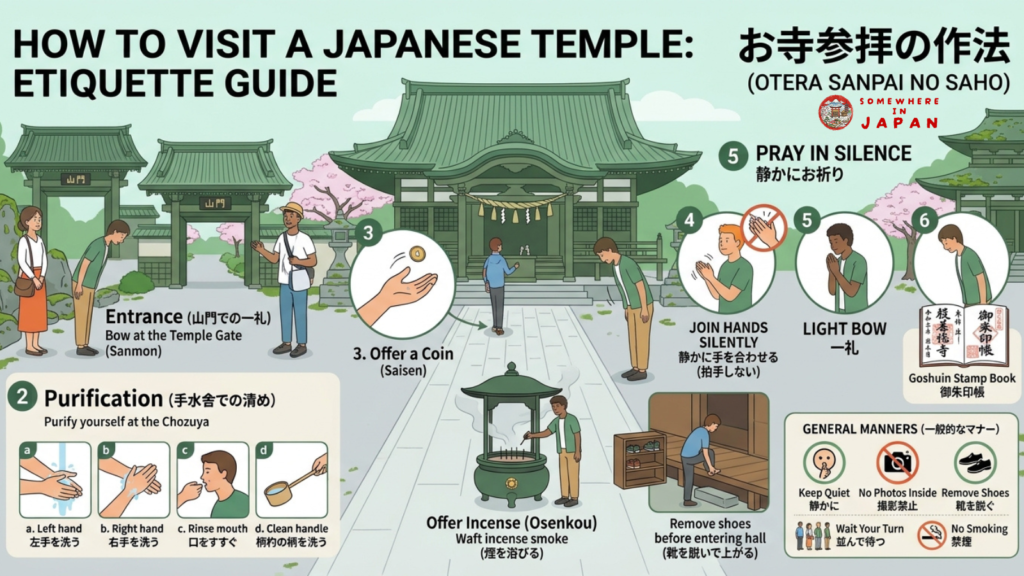
- Incense (Optional): If there is a large bronze incense burner outside the main hall, you may buy a bundle of incense sticks, light them, and place them in the ash. Waft the smoke toward yourself—especially toward any part of your body you want healed or blessed. Do not blow out the flame with your mouth; wave your hand to extinguish it.
- Toss a Coin and Ring the Bell: Gently toss a coin into the offering box. If there is a gong or bell rope, ring it once before praying.
- Bow and Pray Silently: Press your palms together quietly in front of your chest, bow your head slightly, and offer a silent prayer. Do not clap your hands at a Buddhist temple. Finish with one quiet bow.
Quick Comparison: Shrine vs. Temple
| Feature | Shinto Shrine (Jinja) | Buddhist Temple (Otera) |
|---|---|---|
| Entrance Gate | Torii gate (two pillars and crossbars) | Roofed wooden gate (Sanmon) |
| Clapping | Yes (clap twice before praying) | No (hands together silently) |
| Incense | Not used | Common at large incense burners |
| Greeting/ Prayer | Toss coin →2 bows → 2 claps → pray → 1 bow | Toss coin → palms together silently → 1 bow |
| Lucky Charms | Omamori (amulets), Ema (wooden plaques), Goshuin (calligraphy stamps) | Omamori, Goshuin (calligraphy stamps) |
General Manners to Keep in Mind
Check Photography Rules
Taking photos of the grounds and exteriors is usually fine, but photography is strictly forbidden inside most temple halls and shrine sanctuaries. Look for “No Photo” signs before raising your camera.
Keep Voices Low
Treat the grounds like a quiet library or place of worship, especially around people actively praying or meditating.
Remove Hats and Sunglasses
Take off your hat and sunglasses when passing through gates and while praying at the main hall as a sign of respect.
Watch Your Footwear
If you are invited inside a temple building with tatami mats or polished wooden floors, remove your shoes at the entrance and place them neatly on the shelves provided. (Tip: Wear clean, hole-free socks!)
Respect Omikuji (Paper Fortunes)
If you draw a paper fortune and get bad luck (kyo), do not throw it in the trash. Tie it neatly onto the designated wooden racks or pine trees on the grounds to leave the bad luck behind.
Following these simple gestures goes a long way in showing respect for local culture—and allows you to slow down and soak in the quiet atmosphere of Japan’s most timeless places.





Comments